Arantzazu Saratxaga Arregi

Autor: arregi-wp

  • Embedding Systems and Emergency in Complexity

    Embedding Systems and Emergency in Complexity

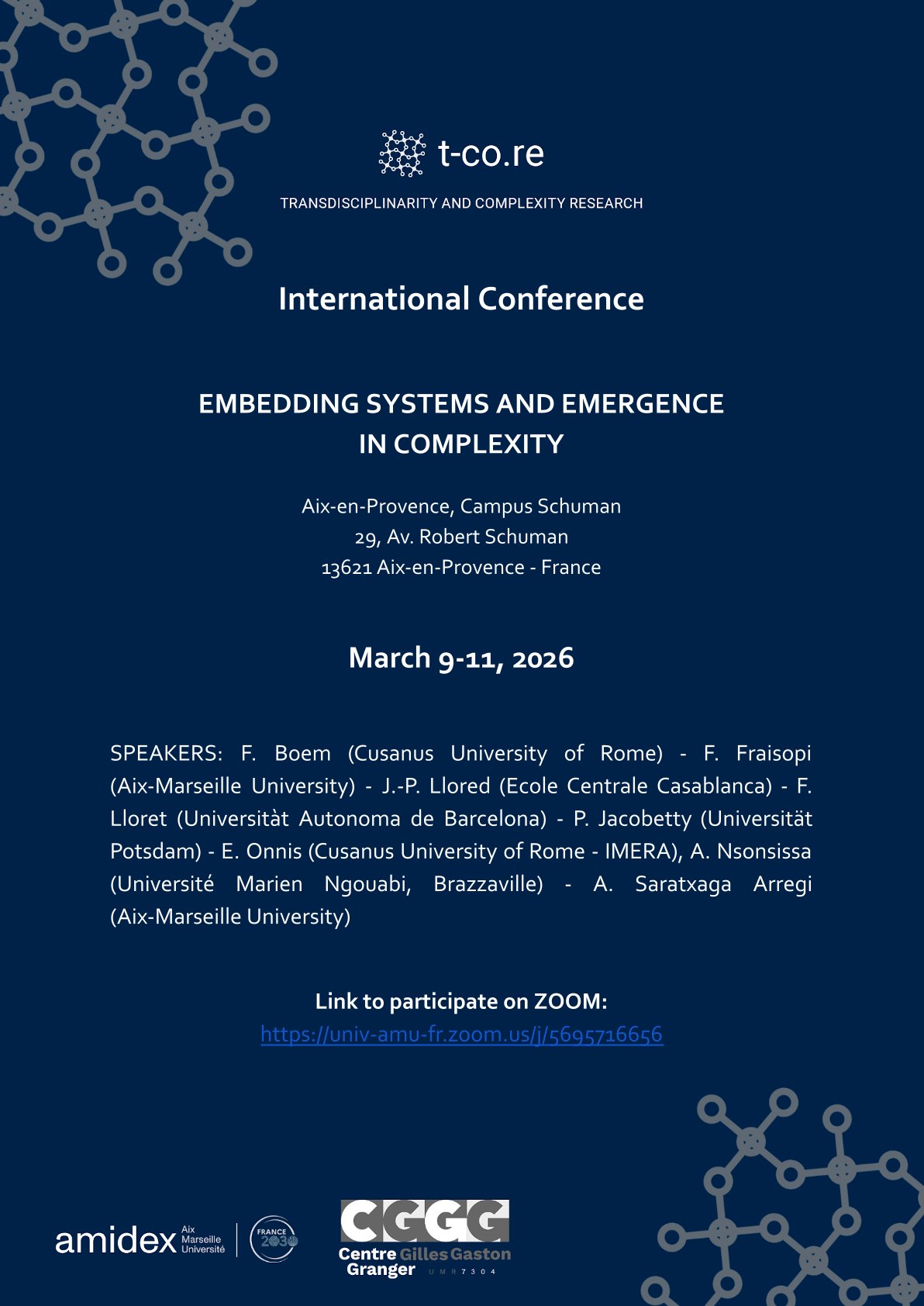
    From 9 to 11 March, the “Embedding Systems” conference will be held as part of the AMIDEX Excellence Chair Project, “Transdisciplinarity and Complexity Research at Aix-Marseille University”.

    The aim of the conference is to investigate the concept of embedding of a system within its environment, examining it in relation to the emergence of complex structures, both as a thesis and as a research hypothesis. This perspective potentially shifts the focus of emergence from the system itself to the environment in which it is embedded.
    This approach can be explored across multiple disciplines, including studies of living systems, ecology, and computer science. Accordingly, the conference will combine formal presentations with discussions and interdisciplinary exchanges. These exchanges will take place through structured discussion rounds, walks, and targeted methodological sessions. We would like to emphasize that learning from one another is just as important as presenting one’s own work.

    Participants: Dr Pedro Jacobetty (Digital Sociology), University of Potsdam, Prof. Francisco Lloret (Ecological Research and Forest Applications), Autonomous University of Barcelona (UAB)/Center for Ecological Research and Forest Applications (CREAF), Prof. Jean-Pierre Llored (Chemistry and Philosophy), Fondation École Centrale Casablanca & Department of Humanities and Social Sciences, École CentraleSupélec, Dr Federico Boem (Biology), Ruhr University, Prof. Erica Onnis (Philosophy), IMERA, Dr. Arantzazu Saratxaga (Philosophy), Aix-Marseille University

    More information: https://www.tcore-chair-amu.fr/agenda/embedding-systems-and-emergence-in-complexity/


  • Reading Group: Process and Reality. An Essay of Cosmology.

    Reading Group: Process and Reality. An Essay of Cosmology.

    Whitehead’s process philosophy presents a dynamic ontology in which reality is understood as a network of unfolding events rather than static substances. This view aligns with complexity theory, which studies emergent, nonlinear and adaptive systems. Both approaches emphasise relationality, processuality and becoming over being. Rather than appearing as a closed whole, reality is seen as an ongoing, creative process characterised by interactions. Complexity theory provides an epistemological framework through which Whitehead’s metaphysical concepts can be interpreted in a systemic and interdisciplinary manner. This connection enables a deeper understanding of living systems, social dynamics and ecological processes, promoting holistic perspectives on reality and knowledge.

    January – December 2026
    (4:30 PM): 23.01 – 20.02 – 20.03 – 17.04 – 22.05 – 19.06 – 24.07 – 21.08 – 18.09 – 23.10 – 20.11 – 18.12


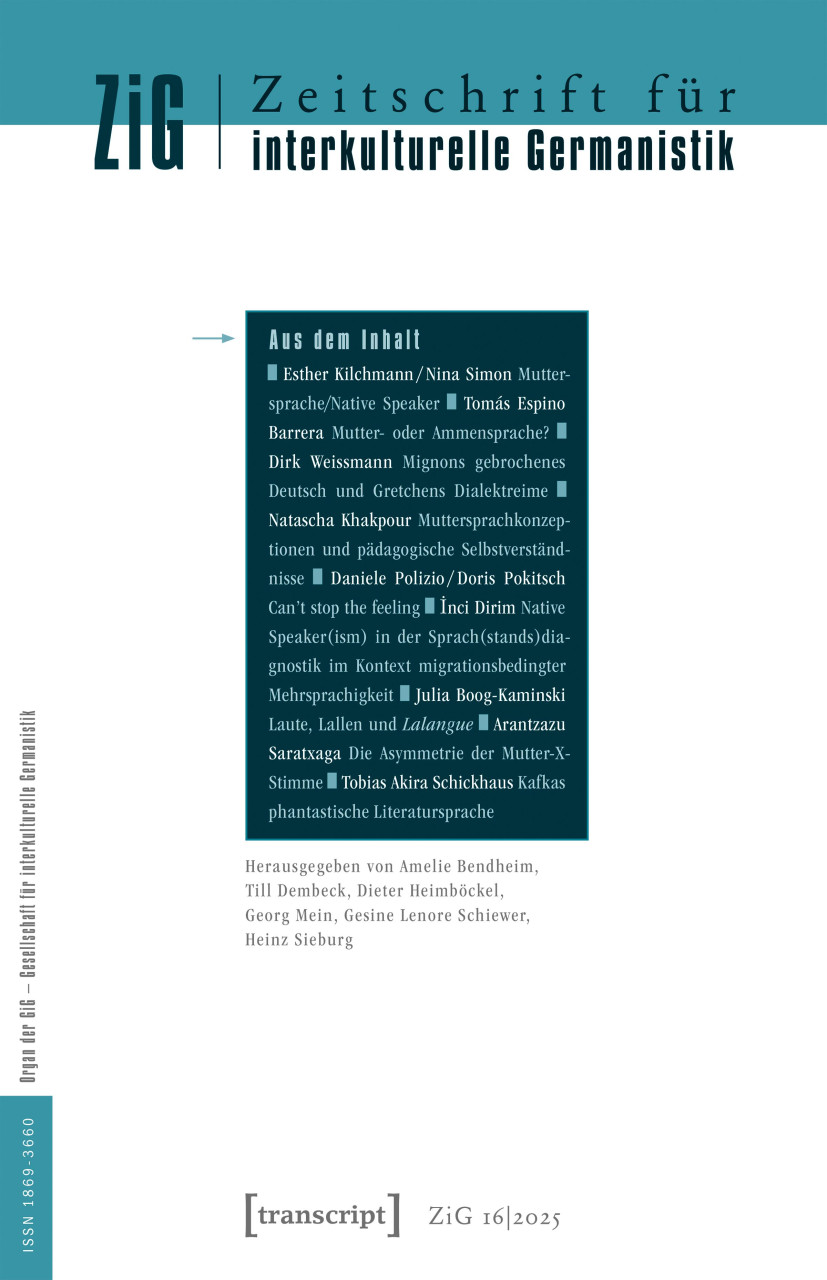
  • Artikel: „Die Asymmetrie der Mutter-X Stimme“.

    Artikel: „Die Asymmetrie der Mutter-X Stimme“.

    This essay uses a philosophical-hermeneutic reading of the Oracle of Delphi’s heralds to portray the mother’s voice as a failed beginning, creating an asymmetry in communication.
    The ancient Pythiae, who received and transmitted the divine voice, are associated with the art of divination. In this essay, however, the reception of Mother Earth’s voice is attributed to a hermeneu- tics of listening. The Oracle of Delphi speaks from the earth’s locus, where the serpent Python, slain by Apollo, dwells. Priestesses receive messages from Mother Earth and convey them in the form of sayings, which priests and philosophers then translate and write down. The circle of communicati- on is maintained by the asymmetry of the ›mother‹ voice.

    Keywords: mother voice; hermeneutics; oracle; divination; listening

    https://doi.org/10.14361/zig-2025-160111


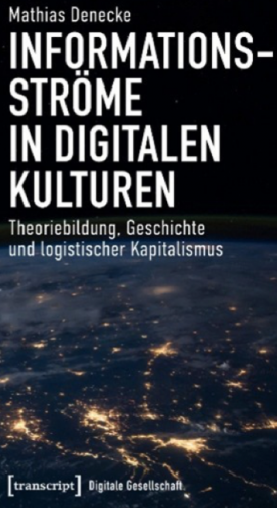
  • Rezension: „Informationsströmein digitalen Kulturen. Theoriebildung, Geschichte und logistischer Kapitalismus“von Matthias Denecke

    Rezension: „Informationsströmein digitalen Kulturen. Theoriebildung, Geschichte und logistischer Kapitalismus“von Matthias Denecke

    Medienimpulse ISSN 2307-3187
    Jg. 63, Nr. 4, 2025 doi: 10.21243/mi-04-25-14

    Ausgehend von der Hauptthese der Monografe „Informations- ströme in digitalen Kulturen. Theoriebildung, Geschichte und lo- gistischer Kapitalismus“ von Matthias Denecke, einer Kritik an der Metaphorologisierung des Wortes „Strom“ zugunsten der Le- gitimierung des Diskurses über die digitale Kultur, thematisiert dieser Review Essay die Anwendung des Begrifs „Strom“ zur Be- schreibung von Kreisläufen und deren Metaphorisierung zu- gunsten der kapitalistischen Informationsgesellschaft. Ergänzt wird dies durch den Vorschlag, statt von Metaphern von Met- onymien zu sprechen, denn „Strom“ steht nicht für die Beschreibung eines Gleichgewichts. Im Gegenteil: Fließen kann wie ein Wirbel disruptiv wirken. Vor allem ist mit „Strom“ die Dynamik der Nichtlinearität in Vorgängen gemeint, die auf unkontrollierte Art und Weise erfolgen können.

    This text is a detailed review essay of the monograph “Informati – onsströme in digitalen Kulturen. Theoriebildung, Geschichte und logistischer Kapitalismus (Information fows in digital cultures. Theory formation, history and logistical capitalism)” by Matthias Denecke. Based on the book’s main thesis – a critique of the use of the metaphor ‘stream’ to legitimise discourse on digital cul- ture – this review addresses the use of the term ‘stream’ to des- cribe cycles and their metaphorisation to serve the capitalist in- formation society. The review supplements the suggestion to speak of metonymies rather than metaphors because ‘fow’ does not describe an equilibrium. In fact, ‘fow’ can have a disruptive efect, like a vortex. Above all, ‘fow’ refers to the dynamics of nonlinearity in processes that can occur in an uncontrolled manner.

  • Conversation: „Art, Complexity and Uncertainty: a conversation with David Familian“.

    Read the fascinating interview with curator and artist David Familian about art and complexity here!

    Yearbook for Philosophy of Complex Systems, 1 (2025): 235 – 248 https://doi.org/10.3790/pcs.2025.1461904

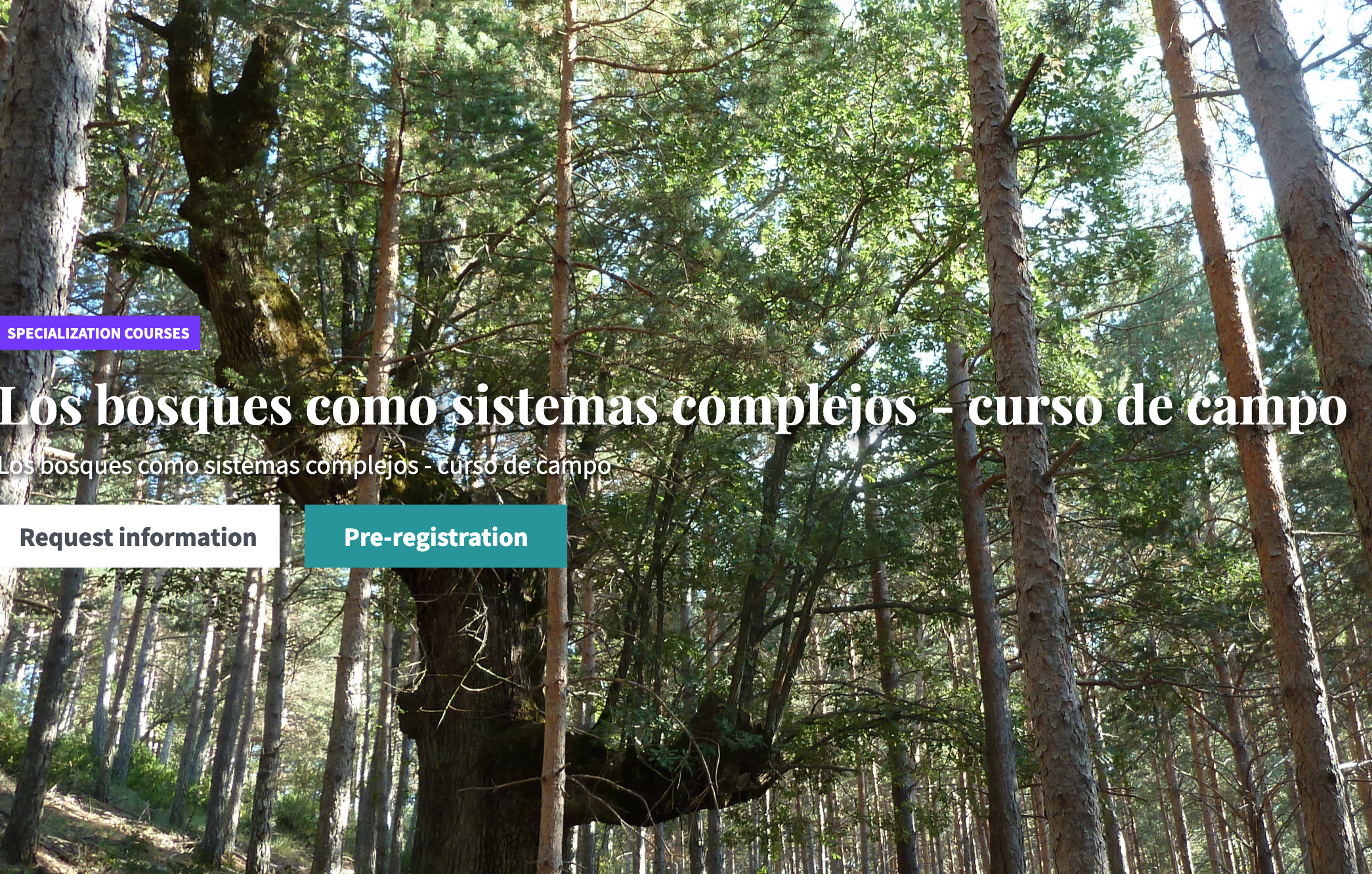
  • A course on complexity as a part of: „Forests as complex systems field course“

    A course on complexity as a part of: „Forests as complex systems field course“

    Teaching theoretical concepts, such as resilience or complexity theory, provides unique challenges especially in applied disciplines. Current trends such as global change will require natural resource disciplines, such as forestry and agriculture, to expand their scientific basis and possibly shift their dominant paradigms to adopt a broader view of the systems they manage as complex social-ecological systems. This likely will result in borrowing and adapting theories and concepts from other disciplines, such as complexity science. Students in natural resources will need more training in these paradigms and learn to incorporate concepts such as thresholds, uncertainty, and cross-scale interactions as they affect ecosystem dynamics into management or restoration prescriptions. Numerous courses and approaches exist that teach general complexity concepts, including management implications at the governance levels. However, we do not know of any courses where these concepts are specifically applied to practical management challenges. This course aims to overcome this shortcoming by providing field exercises that can are used to link theoretical concepts from complexity science to applied forest management issues regardless of management objectives.

  • Vortrag: “Der Kreislauf: Das Pharmakon der Asymmetrien. Eine technikphilosophische Lesart des Verhältnisses von Zirkularität und Entropie”

    Vortrag: “Der Kreislauf: Das Pharmakon der Asymmetrien. Eine technikphilosophische Lesart des Verhältnisses von Zirkularität und Entropie”

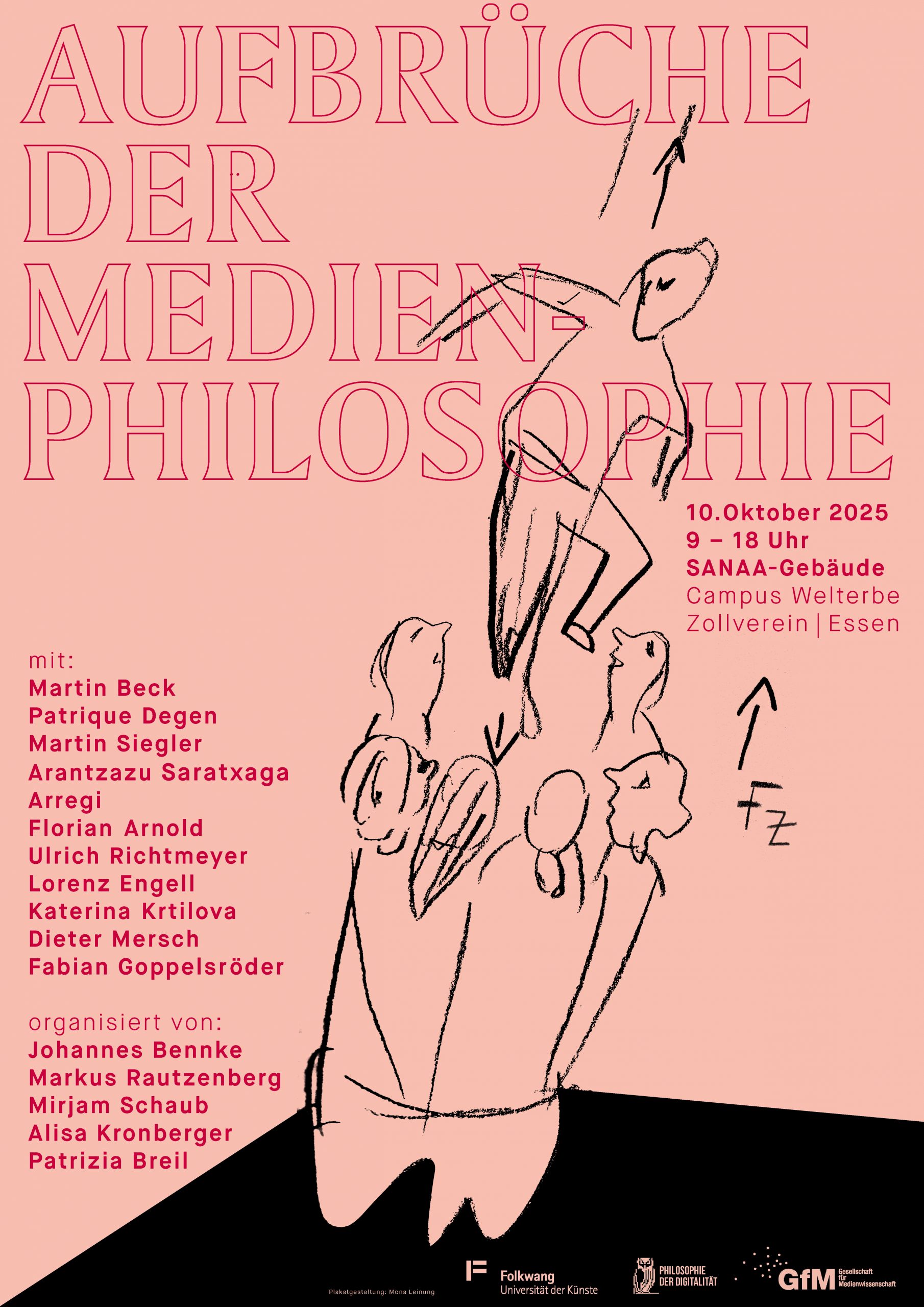
    Es ist ein Vergnügen, an der Veranstaltung „Aufbrüche der Medienphilosophie” teilzunehmen, insbesondere an dem Vortrag „Der Kreislauf: Das Pharmakon der Asymmetrien”. Eine technikphilosophische Lesart des Verhältnisses von Zirkularität und Entropie” teilnehmen zu dürfen!

    Programm

  • Lecture: “Emergence through environmental embedding.”

    Lecture: “Emergence through environmental embedding.”

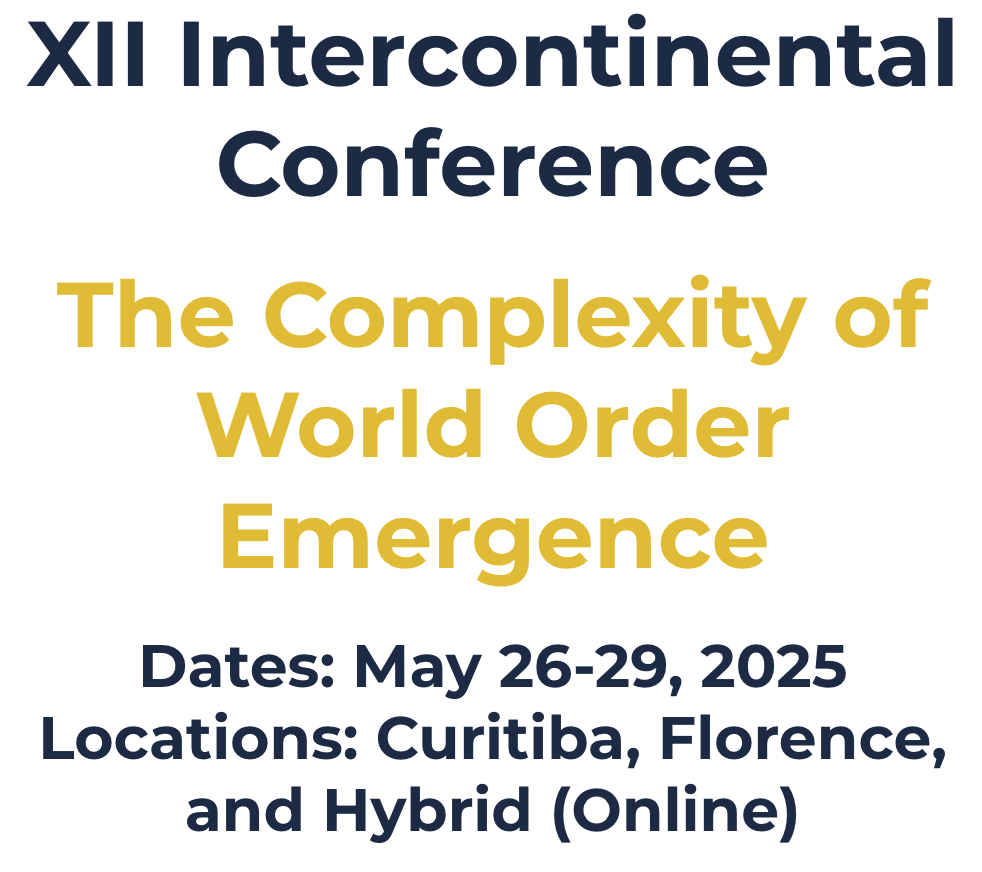
    I am delighted to present my lecture, ‚Emergence through Environmental Embedding‘, at the XII Intercontinental Conference, ‚The Complexity of World Order Emergence‘, organised by the World Complexity Science Academy (WCSA).

    Abstract

    The aim of my presentation is to present the philosophical theories to understand the phenomenon of emergence, not as the matter itself, but as the (self-)organisation of the system. The organisation of the system arises from the relational correlation between system and environment, in such a way that the emergence can also be successful, under condition of embedding in the system. The ecological relational of embedding is the principle of generation of structures or emergence of patterns.

    The ontological analysis of the concept of emergence shows that only the embedding of emergent properties in certain emergent levels or layers enables the permanent emergence of new structures. Conversely, the singular appearance of any new thing as an object, property, or structural element would only be an irrelevant variation of the given, which occurs constantly and everywhere anyway. The resulting ontological questions are, for example What is an emergent level? How do individual variations of the given gradually coalesce into emergent properties and objects? How can the relationship between different emergent levels be described?

    The ontological approach to the study of emergence is thus holistic in nature, i.e. it sees the whole of a structural section of the world as the actual carrier of emergence. If we assume that emergence is a certain kind of event, i.e. a process, then emergence theory falls within the realm of general process philosophy. It follows that general process conditions, i.e. those that apply to any conceivable process, must also apply to emergent processes. Emergence as a structural phenomenon can thus be understood as a differentiation of antecedent process conditions.

  • Lecture: “L’Endomilieu: : L’intérieur est l’extérieur du système”

    Lecture: “L’Endomilieu: : L’intérieur est l’extérieur du système”

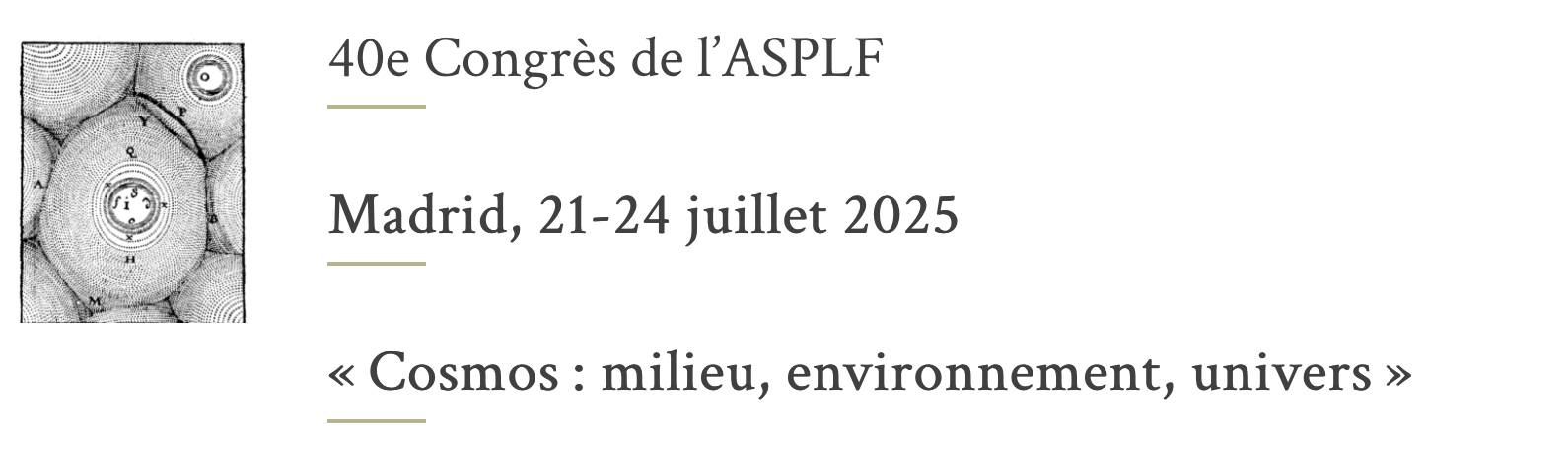
    It is a pleasure to present my lecture, „L’Endomilieu: The Interior is the Exterior of the System” at the 40th ASPLF Congress, “Cosmos: milieu, environment, univers,” at the Autonomous University of Madrid.

    Abstract

    The topic of this paper is an explanation of the inside/outside relation between the milieu and the system.
    I would like to place this discussion in the midst of two seemingly opposing views: On the one hand,
    the post-structuralist legacy of Foucault, along with the concept of environment of Deleuze and Guattari,
    who have assigned the latter towards an outside, and on the other hand, the concept of milieu of theories
    of operational closure (Heinz von Foerster, Niklas Luhmann, Gotthard Günther, etc), according to which
    the milieu is placed inside the system.
    The concept of environment represents an outside for both ecological studies and general systems
    theory. It is regarded as an outside that interacts with the system. The self-organization theories initiated
    a turn in the system/environment paradigm. Milieu or environment are no longer introduced into the
    order of observation as the outside, but only through their difference from the system or, in other words,
    via the opposition of system/environment. Through the dialectical method of re-entry, operative theories
    assume that there is no longer an outside, and if there is, it is introduced into the system as a blind spot.
    Thus, self-organization theories that have formulated openness to the outside and closure to the inside
    and provided formalization accodringly, contribute to the abolition of the concept of outside. The
    dissolution of an external objective reality is realized in exchange for an omnipotent subject that can see
    or observe everything. The inside of the system becomes the outside for self-organization theories as
    soon as it turns into a blind spot. The inside of a system, the black box that controls it and simultaneously
    classifies its input, forms the unpredictable outside of the observer.
    A dialogue between post-structuralist positions on the outside of thinking in combination with the
    approaches of the disappearance of the outside in the operative theories can be very fruitful for today’s
    conversations about an increasingly complex world and its means to observe its epistemology.

  • Programmierte Hoffnung, ein Bericht und eine Besuchseinladung.

    Programmierte Hoffnung, ein Bericht und eine Besuchseinladung.

    Am 1. April besuchte ich die Ausstellung „Programmierte Hoffnung“, „die erste umfassende und systematische Untersuchung der Bauabteilung an der HfG Ulm“ (Katalog 2025: 27). Basierend auf den reichen Beständen des Archivs dieser Hochschule für Gestaltung (HfG), von denen ein Teil mit dieser Ausstellung erstmals der Öffentlichkeit zugänglich gemacht wird, bietet sie einen fundierten Überblick über Geschichte, Lehrmethoden und zukunftsweisende Konzepte dieses bislang wenig erforschten Fachs. Dank gilt den Kuratoren der Ausstellung Dr. Chris Dähne (Goethe-Universität Frankfurt am Main), PD Dr.-Ing. Helge Svenshon (Technische Universität Darmstadt) und Dr. Martin Mäntele (Leiter des HfG-Archivs) für ihre großartige Arbeit.

    # Geschichte

    Otl Aicher und Inge Scholl sollen mit Max Bill (Mäntele 2025: 57) über ihre Idee gesprochen haben, eine Geschwister-Scholl-Hochschule zum Gedenken an die von den Nationalsozialisten ermordeten Geschwister Hans und Sophie Scholl zu gründen. Aicher, Scholl und Bill, der das Hauptgebäude entwarf, übernahmen die Gründung der Hochschule, die von der Mitte der 1950er-Jahre bis zu ihrem Ende 1968 eine der wichtigsten Hochschulen für Industriedesign der Nachkriegszeit war.

    # Modellierung von Gesellschaft und Systemen: Curriculum

    An der HfG Ulm entwickelte sich ein neues Architekturverständnis, das stark von neuen wissenschaftlichen Methoden und technischen Innovationen geprägt war. Es begann mit einem traditionellen Ansatz der Architektenausbildung bei Max Bill, der sich mit Konrad Wachsmann wandelte und mit Herbert Ohl den Schwerpunkt auf das industrialisierte Bauen legte.

    Der Bezug zum einstigen Bauhaus in Dessau ist offensichtlich. Der Name der Hochschule für Gestaltung trägt die Zusatzbezeichnung des Staatlichen Bauhauses in Dessau, „Hochschule für Gestaltung“, nachdem Walter Gropius gefragt wurde, ob es in seinem Sinne sei, den vollen Namen, nämlich Bauhaus, zu übernehmen. Scholl, Aicher und Bill, so die zurückhaltende Antwort, machten diesen Zusatz geeignet. Ebenso bestand Aicher auf der Besonderheit der HfG Ulm, „kein zweites Bauhaus, keine Wiederholung“ (zitiert nach Mäntele 2025: 58) zu sein.

    # Programmierte Hoffnung: Als die Information, die die Kommunikation zur Hoffnung beigetragen hat, programmiert.

    Innovation hatte nicht den Anspruch, der Zukunft nach dem Muster moderner Funktionsoptimierung zu folgen. Innovation bedeutete für Ulm, Modelle, Strukturen und Konstruktionen für eine Welt der Zukunft zu entwerfen. Vielmehr lag der Schwerpunkt der Innovation auf der Notwendigkeit, Hoffnung durch und mit systemischem Denken, Kybernetik, visuellen Methoden und Informationsästhetik zu gestalten. Claude Schnaidt, ehemaliger Dozent im Erziehungsfakultät, prägte 1964 den Begriff „prefabricated hope“.

    Hoffnung war kein ethischer Wert, wenn man sie als praktische Handlungskategorie betrachtet, sondern eine Utopie: „Hope as a driving force for societal change and progress“ (Katalog 2025: 25). Ernst Bloch besuchte die Schule 1964.

    Blochs Philosophie der Hoffnung sollte sich als roter Faden durch die Strukturen und Konstruktionen einer noch zu schaffenden Gesellschaft ziehen. Die Philosophie der Hoffnung war eine Inspirationsquelle für die Gestaltung wissenschaftlicher Disziplinen, wie die „Futurologie“. Die zukunftsorientierte Gestaltungsdisziplin wurde zum Gegenstand von Forschung und Lehre an der Hochschule. In Anlehnung an Herbert Ohl schrieb er einmal:

    „If one question reality today and sets aside social, economic, and technical occurrences, one will invariably find oneself compelled to design utopias. These (…) can nevertheless possess the character of insightful experiments and assume the function of role models“ (zit. nach Katalog 2005: 26).

    # Kybernetik & Informationsästhetik: Wege zur Utopie

    Die Kybernetik stand damals nicht nur im Dienst der operativen Forschung oder der Steuerungspolitik. Sie diente auch dem Entwurf von Modellen und Strukturen für eine Welt der Zukunft. Die HfG Ulm war ein Nischenlabor für utopisches Gestalten mithilfe von Kommunikationskreisläufen, Information und Technik. Der Philosoph und Wissenschaftstheoretiker Max Bense führte moderne Disziplinen wie Kybernetik und Informationsästhetik ein, die ein „technisches Bewusstsein“ fördern. Bense definierte Methodologie als eine Art, komplexe technische und ästhetische Phänomene zu ordnen. 1964 entwickelte der Physiker und Kommunikationswissenschaftler Abraham Moles Benses Theorien der Information und Ästhetik weiter. Helmar G. Frank, eine Schlüsselfigur der Kybernetik und Strukturtheorie, ergänzte sie um theoretische Disziplinen.  Norbert Wiener hielt 1956 einen Vortrag über künstliche Grammatiken für Universalsprachen.

    Eine harmonische Verbindung von Systemdenken, kybernetischen Ansätzen und analytischen Verfahren zielte auf die Gesellschaft der Zukunft ab. Dabei ging es weniger um Kontrolle als um eine Ästhetik der Hoffnung durch Kommunikation, um einen neuen logischen, technischen und analytischen Zugang zu generativen Gestaltungsprozessen, die dem Bauen der Zukunft eine Gestalt geben sollten.